

The 100 Day Project #15
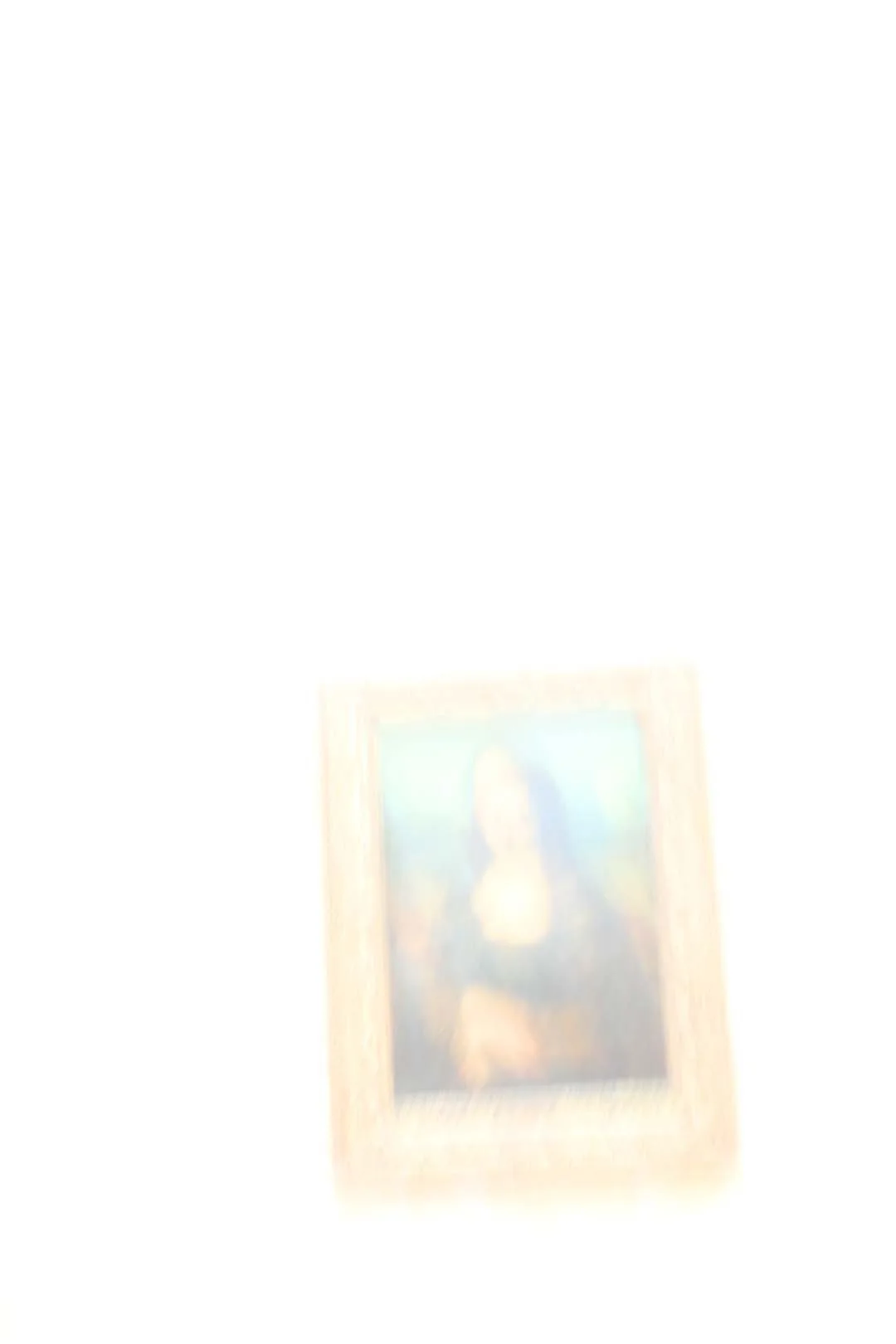
After Salaì
The Louvre, Paris, France, 2014
The 100 Day Project, Day 15.
"It's so small." This sentence is murmured in countless languages, every day, in front of the most famous painting in the world.
It is the first thing you notice. After years of seeing reproductions, viewing the Mona Lisa with your own eyes can be genuinely shocking — not because she disappoints, but because the scale of her fame and the scale of the painting itself are so wildly mismatched.
For me though, it was the crowds that were most shocking. If you visit the Louvre, it is nearly impossible to actually see the Mona Lisa. And if you're short, even harder. The crowds are difficult to describe — twenty to thirty people deep, arms raised, cell phones snapping. Luckily I'm patient when I really want something. I waited until the exceedingly large bus tour group had taken their last photo, then made my way to the front and planted myself right in front of her.
She is lovely, Lisa is. Truly. A delightful mix of flirty and aloof that has enticed and confused viewers for hundreds of years.
It is hard to explain what it feels like to finally stand in front of an artwork you've seen countless times in reproductions and pop culture. Expectation is hard to manage. It's the strangest mix of elation and disappointment — and the disappointment surprised me. Not in her, exactly. More in the experience of the myth colliding with the reality of a small painting behind bulletproof glass, surrounded by strangers holding up phones.
In my photograph she is small and blurred, slipping through a vast space toward the edge of the frame — the pedestal quietly disappearing beneath her. Even Lisa, it turns out, can fall.
This image is part of my project Co-Authored — a collection of abstract photographs born from my discomfort with artistic appropriation. I embarked on pilgrimages to photograph artworks in some of the most inspiring museums around the world, resulting in a collection that is playful and mysterious, yet sophisticated and elegant. Because museums are largely filled with art made by men, I titled each artwork after the partner or spouse of the artist whose work I photographed — my way of giving voice to the unrecognized support systems that have made so many male artists' careers possible.
A note on my process: all of my photographs are made using long shutter speeds, with my camera held in my hands. I selectively move and hold the camera in a variety of directions, constantly adjusting exposure values to achieve what I'm after — no Photoshop, no AI. Just light, motion, time, and my vision.
About the photo: After Salaì
Gian Giacomo Caprotti da Oreno (1480–1524), known as Salaì or "the little devil," entered Leonardo da Vinci's household at age ten and remained his apprentice, companion, and likely lover for nearly thirty years. He modeled for several of Leonardo's most celebrated works, including St. John the Baptist and Bacchus, and accompanied Leonardo to France in 1516. Following Leonardo's death, Salaì facilitated the sale of several paintings — including the Mona Lisa — to King Francis I before dying in 1524 from wounds sustained in a duel.
Artwork: Mona Lisa (1503 - 1519)
Artist: Leonardo Da Vinci
Location: The Louvre, Paris, France
About the 100 Day Project: A global creative challenge where thousands of artists share a piece of their practice every single day for 100 days. I'm joining creatives around the world, and I'm excited to bring you along. Each day I'll be sharing one of my photos — some recent, some old, and some from my current project — along with the story behind it: where I was, who I was with, and why I love it